Introduction
Microbiology is an important branch of biological science that explores microorganisms and their interactions with humans, animals, plants, the environment, and industrial processes. From developing medicines and vaccines to maintaining food safety and identifying infectious diseases, microbiology plays a vital role in modern scientific advancement.
A BSc in Microbiology helps students develop an understanding of microbial life, laboratory techniques, biological processes, disease-causing organisms, and the practical applications of microorganisms in different industries.
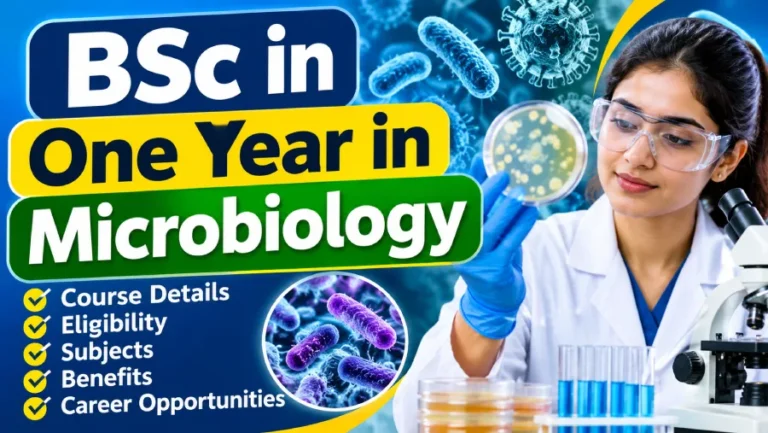
The BSc in One Year in Microbiology programme is aimed at students exploring flexible higher education pathways, subject to eligibility, university regulations, academic credit recognition, and the availability of an approved accelerated programme. It can be relevant for learners seeking to strengthen their academic qualifications or pursue further education in biological and life sciences.
What Is BSc in Microbiology?
BSc in Microbiology is an undergraduate science programme that studies microorganisms, including bacteria, viruses, fungi, algae, and microscopic parasites. The course introduces students to the structure, classification, growth, reproduction, genetics, and behaviour of microorganisms.
Microbiology is closely connected with several scientific disciplines, including biotechnology, immunology, molecular biology, genetics, biochemistry, environmental science, and medical science.
Students studying microbiology learn how microorganisms affect living organisms, how infections spread, how microbes are identified in laboratories, and how beneficial microorganisms are used in agriculture, food production, pharmaceutical development, and industrial applications.
BSc in One Year in Microbiology: Course Overview
| Course Details | Information |
|---|---|
| Course Name | Bachelor of Science in Microbiology |
| Degree Level | Undergraduate |
| Duration | 1 year, subject to approved eligibility and academic pathway |
| Field | Biological Sciences |
| Study Areas | Microorganisms, Genetics, Microbial Diseases, Biotechnology |
| Learning Mode | As permitted by the institution and programme approval |
| Eligibility | Depends on previous qualification and university rules |
| Career Areas | Laboratories, Biotechnology, Pharmaceuticals, Food Industry, Research |
| Higher Education | MSc Microbiology, Biotechnology, Life Sciences and related fields |
Can You Complete BSc Microbiology in One Year?
The possibility of completing a BSc in Microbiology in one year depends on the university, previous academic qualifications, transferable credits, admission category, and the specific programme pathway available.
Regular BSc programmes in Microbiology generally have a multi-year academic duration. A one-year completion route should not be assumed to be equivalent to a standard degree unless the institution has a valid and approved structure for that pathway.
Students should confirm the following before applying:
- Whether one-year degree completion is officially permitted under the programme.
- Whether previous academic credits or qualifications are eligible for consideration.
- Whether the university is recognised and the degree is valid for the intended purpose.
- Whether laboratory and practical requirements are included.
- Whether the programme and study mode are officially approved for the relevant academic session.
Students should obtain written confirmation of these details before making an admission or fee payment decision.
Eligibility for BSc in One Year in Microbiology
Eligibility requirements can vary depending on the institution, programme structure, and admission pathway.
Common eligibility considerations may include:
- Completion of Class 12 with Science subjects, preferably Biology.
- A previous undergraduate qualification for applicable accelerated or credit-transfer pathways.
- Academic transcripts and previous marksheets.
- Relevant credits or coursework, where required.
- Meeting the university’s admission and documentation requirements.
Students from Biology, Biotechnology, Chemistry, Zoology, Botany, or other related academic backgrounds may find microbiology relevant to their previous studies or future academic goals.
Subjects Covered in BSc Microbiology
The BSc Microbiology curriculum introduces students to essential concepts of microbial science, laboratory investigation, genetics, infection, biotechnology, and environmental applications.
1. General Microbiology
Introduces microorganisms, their classification, characteristics, structure, growth, reproduction, and importance in different biological and industrial systems.
2. Bacteriology
Focuses on bacteria, including their morphology, classification, metabolism, growth patterns, and interactions with humans and the environment.
3. Virology
Studies viruses, their structure, replication, classification, host interactions, and their role in infectious diseases.
4. Mycology
Explores fungi, including yeasts and moulds, their characteristics, reproduction, ecological importance, and applications.
5. Microbial Genetics
Introduces genetic material, gene expression, mutations, genetic variation, inheritance, and genetic mechanisms in microorganisms.
6. Immunology
Explains the immune system, antibodies, antigens, immune responses, vaccination concepts, and the body’s defence mechanisms against infections.
7. Biochemistry
Studies the chemical processes of living organisms, including proteins, carbohydrates, lipids, enzymes, metabolism, and cellular reactions.
8. Medical Microbiology
Examines microorganisms associated with human diseases, infection mechanisms, laboratory diagnosis concepts, prevention, and public health importance.
9. Environmental Microbiology
Explores microorganisms in soil, water, air, and natural ecosystems, including their role in decomposition, nutrient cycles, pollution control, and environmental sustainability.
10. Industrial Microbiology and Biotechnology
Studies the use of microorganisms in industrial processes such as fermentation, enzyme production, pharmaceuticals, food processing, biotechnology, and other commercial applications.
Practical Learning in Microbiology
Microbiology is a laboratory-oriented subject that involves practical learning and scientific investigation. Depending on the programme, students may be introduced to practical areas such as:
- Laboratory safety and good laboratory practices.
- Microscopy and microbial observation.
- Preparation and handling of laboratory materials.
- Microbial identification principles.
- Basic microbiological testing.
- Scientific record keeping and laboratory reporting.
- Understanding contamination control and quality assurance.
Practical training requirements are especially important when evaluating a flexible or accelerated degree programme. Students should check how the university fulfils the laboratory component and practical learning requirements.
Benefits of Studying BSc in Microbiology
1. Growing Relevance Across Industries
Microbiology is important in healthcare, biotechnology, pharmaceuticals, agriculture, food processing, environmental science, and research.
2. Scientific Knowledge and Understanding
The programme helps students understand microbial life, biological systems, infections, genetics, and the relationship between microorganisms and their surroundings.
3. Laboratory-Based Skill Development
Students gain exposure to scientific methods, observation, laboratory processes, documentation, and analytical thinking.
4. Opportunities in Biotechnology
Microbiology contributes to the development of vaccines, medicines, enzymes, fermentation products, diagnostic technologies, and biotechnology innovations.
5. Diverse Career Possibilities
Graduates may explore roles in laboratory support, quality control, pharmaceutical production, food safety, research assistance, and related scientific sectors.
6. Further Education Opportunities
A BSc in Microbiology can provide an academic foundation for postgraduate studies in microbiology, biotechnology, molecular biology, immunology, life sciences, and related disciplines, subject to admission criteria.
Career Opportunities After BSc Microbiology
A microbiology degree can help graduates explore several entry-level and support roles across science-related industries. The exact job eligibility depends on the employer, practical experience, additional training, and the nature of the position.
1. Microbiology Laboratory Assistant
Supports routine laboratory activities, sample documentation, equipment preparation, and laboratory organisation under supervision.
2. Quality Control Assistant
Helps monitor product quality, maintain records, and assist with testing procedures in pharmaceutical, food, and manufacturing environments.
3. Research Assistant
Supports research projects through documentation, data collection, sample management, and basic laboratory assistance.
4. Food Microbiology Assistant
Assists in food quality testing, hygiene monitoring, contamination control, and food safety processes.
5. Pharmaceutical Production Assistant
Works in production support, documentation, quality processes, and manufacturing environments in pharmaceutical companies.
6. Biotechnology Assistant
Supports biotechnology operations, research activities, production processes, and laboratory work.
7. Environmental Laboratory Assistant
Assists with environmental sample handling, water quality monitoring, testing support, and laboratory documentation.
8. Clinical Laboratory Support Staff
May assist with non-regulated laboratory support activities where permitted, depending on employer requirements, training, and applicable regulations.
9. Scientific Content Writer
Creates educational and informational content related to microbiology, biotechnology, biological sciences, laboratory processes, and scientific research.
10. Microbiology Research Trainee
May pursue research training or trainee positions to gain further experience in microbial science, biotechnology, molecular biology, or laboratory research.
Industries That Hire Microbiology Graduates
Microbiology graduates can explore opportunities in various sectors, including:
- Pharmaceutical companies
- Biotechnology companies
- Food and beverage manufacturing
- Healthcare and diagnostic laboratory environments
- Academic and research institutions
- Agricultural and agrochemical industries
- Environmental testing organisations
- Water treatment and sanitation
- Cosmetics and personal care manufacturing
- Microbial product and fermentation industries
The availability of opportunities depends on the candidate’s practical skills, location, qualifications, and employer-specific requirements.
Skills Developed During BSc Microbiology
The programme can help students develop a combination of scientific, analytical, and professional skills.
- Scientific observation and analytical thinking
- Laboratory safety awareness
- Microbial science fundamentals
- Research and information analysis
- Scientific documentation
- Quality control awareness
- Attention to detail
- Data interpretation
- Problem-solving
- Teamwork and communication
These skills can be useful in laboratory environments, scientific research, manufacturing, quality assurance, and further academic study.
Higher Education Options After BSc Microbiology
Students interested in expanding their knowledge or pursuing specialised career pathways may consider further education.
1. MSc Microbiology
Provides advanced knowledge of microorganisms, microbial genetics, research methods, applied microbiology, and specialised areas of microbial science.
2. MSc Biotechnology
Focuses on the application of biological systems in research, healthcare, industrial production, agriculture, and biotechnology development.
3. MSc Molecular Biology
Offers advanced study of molecular mechanisms, genetic material, gene expression, cellular processes, and biological research.
4. MSc Medical Microbiology
Focuses on microorganisms associated with diseases, diagnostic concepts, infection-related research, and medical applications, subject to programme eligibility.
5. MSc Biochemistry
Explores biochemical processes, molecular interactions, enzymes, metabolism, and the chemistry of living organisms.
6. MSc Immunology
Provides advanced study of immune responses, immunological mechanisms, disease processes, and related research areas.
7. Research and Doctoral Studies
Eligible students may pursue research-oriented postgraduate pathways and eventually doctoral programmes based on their academic background and admission requirements.
Is Microbiology a Good Career Choice?
Microbiology can be a rewarding academic and career field for students who enjoy biology, scientific investigation, laboratory work, and understanding how microorganisms affect the world.
The discipline is relevant to many areas of modern science, including infectious disease research, food safety, environmental protection, biotechnology, pharmaceutical manufacturing, and agricultural development.
However, career progression in microbiology often depends on more than a bachelor’s degree. Practical laboratory experience, internships, specialised training, postgraduate qualifications, and technical skills can improve career prospects and help graduates qualify for more advanced opportunities.
How to Choose the Right University for BSc Microbiology
Before enrolling in a BSc Microbiology programme, students should evaluate the university carefully.
Consider the following factors:
- University recognition and degree validity.
- Official programme duration and completion requirements.
- Eligibility for any accelerated or credit-transfer pathway.
- Curriculum and subject coverage.
- Laboratory and practical training facilities.
- Faculty qualifications and academic support.
- Learning resources and student support services.
- Fees, payment policies, and refund terms.
- Eligibility for postgraduate admission or employment.
- Written confirmation of the programme structure.
Choosing an appropriate university helps students make informed decisions about their education and future career plans.
Frequently Asked Questions (FAQs)
1. What is BSc Microbiology?
BSc Microbiology is an undergraduate science programme that studies microorganisms such as bacteria, viruses, fungi, and other microscopic organisms, including their structure, behaviour, genetics, and applications.
2. Can I complete BSc Microbiology in one year?
One-year completion may be possible only through an eligible and officially approved academic pathway. Students should confirm the programme structure and requirements directly with the university.
3. What are the eligibility criteria for BSc Microbiology?
Eligibility generally depends on Class 12 Science qualifications or other academic credentials accepted under the university’s specific admission pathway.
4. Is Biology compulsory for BSc Microbiology?
Many traditional BSc Microbiology programmes require or prefer Biology at the Class 12 level. Eligibility varies by institution.
5. What subjects are taught in BSc Microbiology?
Common subjects include General Microbiology, Bacteriology, Virology, Mycology, Microbial Genetics, Immunology, Biochemistry, Medical Microbiology, Environmental Microbiology, and Industrial Microbiology.
6. What jobs can I get after BSc Microbiology?
Graduates may explore laboratory assistant, quality control assistant, research assistant, food microbiology assistant, biotechnology assistant, pharmaceutical production support, and related entry-level roles.
7. Can I work in a pharmaceutical company after BSc Microbiology?
Yes, graduates may be eligible for certain entry-level support, production, documentation, or quality-related roles depending on the employer’s requirements.
8. Is BSc Microbiology useful for higher studies?
Yes. It can provide a foundation for postgraduate studies in Microbiology, Biotechnology, Molecular Biology, Immunology, Biochemistry, and related life science fields.
9. Does BSc Microbiology include practical training?
Microbiology is a practical science discipline. Laboratory training, experiments, and practical learning are important components of conventional programmes. Students should verify how practical requirements are fulfilled in their chosen programme.
10. What is the scope of microbiology in the future?
Microbiology remains relevant to biotechnology, pharmaceutical research, food safety, environmental monitoring, agriculture, microbial products, and scientific research. Career advancement may require additional qualifications and practical experience.
Conclusion
BSc in Microbiology is a valuable academic pathway for students interested in microorganisms, biological sciences, biotechnology, research, and laboratory-based careers. It provides an introduction to microbial science and its applications across healthcare, pharmaceutical, environmental, food, and industrial sectors.
For students considering a BSc in One Year in Microbiology, understanding eligibility, university recognition, academic credits, programme approval, and practical training requirements is essential before admission.
With the right academic foundation, practical experience, and further specialisation, microbiology can open pathways to diverse opportunities in scientific research, biotechnology, laboratory support, quality assurance, and higher education.