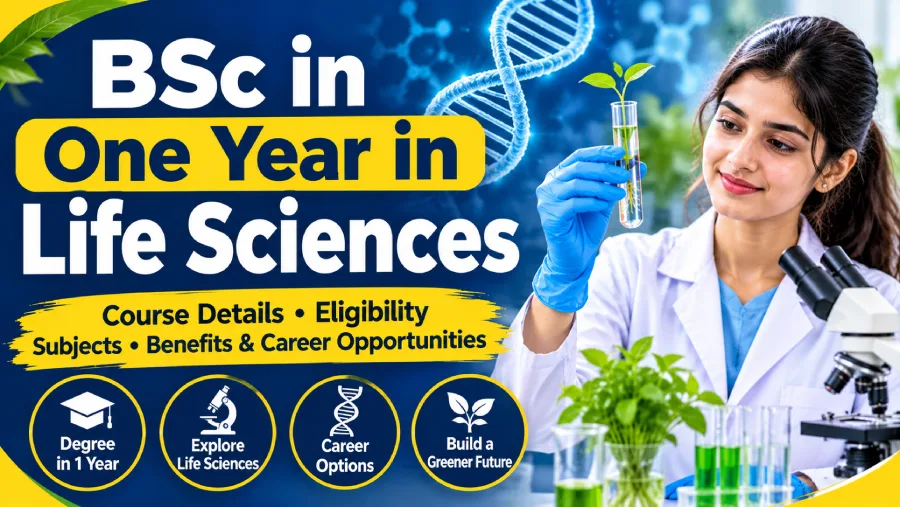
What Is a BSc in Life Sciences?
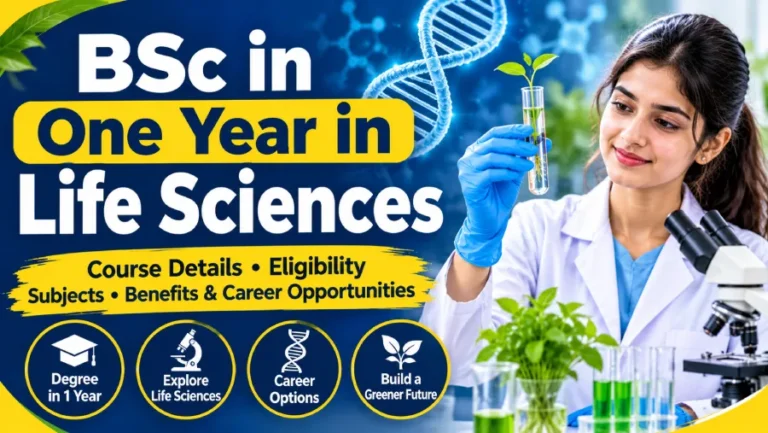
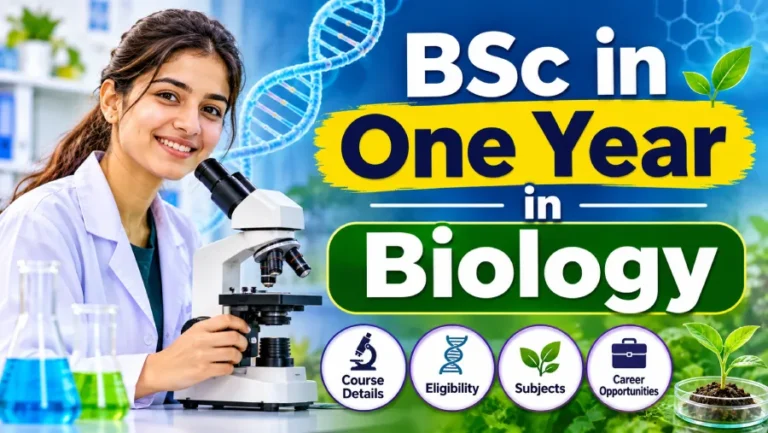
A Bachelor of Science (BSc) in Life Sciences is an undergraduate programme that focuses on the scientific study of living organisms and biological systems. It explores how plants, animals, microorganisms and humans function, develop and interact with their surroundings.
The programme combines theoretical knowledge with practical learning in biology, genetics, microbiology, biotechnology, ecology and related subjects.
Depending on the university, related programmes may be offered under names such as:
- BSc Life Sciences
- BSc Biological Sciences
- BSc Applied Life Sciences
- BSc Life Science and Biotechnology
- BSc Biological and Environmental Sciences
The curriculum and specialisations may differ between institutions.
BSc in Life Sciences: Course Overview
| Course Detail | Information |
|---|---|
| Degree | Bachelor of Science (BSc) |
| Specialisation | Life Sciences |
| Academic Level | Undergraduate |
| Field | Biological and Natural Sciences |
| Standard Duration | Usually 3–4 years, depending on the programme |
| Eligibility | Class 12 or equivalent |
| Preferred Subjects | Biology, Chemistry and other science subjects |
| Learning Areas | Genetics, microbiology, ecology and biotechnology |
| Study Format | Regular, online or distance, where officially permitted |
| Career Sectors | Research, laboratories, biotechnology and environmental science |
Can You Complete a BSc in Life Sciences in One Year?
The possibility of completing a BSc in Life Sciences in one year depends on a student’s previous education, completed academic credits and the university’s approved academic policies.
A standard undergraduate degree cannot automatically be shortened to one year simply by choosing an online or distance learning format.
Students may explore the following academic pathways:
1. Credit Transfer
Students who have already completed relevant university-level subjects may be eligible to transfer credits to another institution. The receiving university evaluates previous coursework, grades and credit requirements before approving any transfer.
2. Recognition of Prior Learning
Some institutions may assess previously acquired academic learning against programme requirements. However, eligibility and the amount of recognised learning depend on the institution’s policies.
3. Accelerated Degree Pathways
Certain universities may offer approved accelerated study arrangements for eligible students. These pathways have specific academic requirements and do not guarantee one-year completion.
4. Flexible Learning Options
Online and distance learning can offer greater flexibility for students balancing education with work or other responsibilities. However, students must verify that the university and specific programme are officially permitted for the relevant academic session and mode of delivery.
Important: Before enrolling in a programme advertised as a one-year BSc in Life Sciences, obtain written confirmation of the degree-awarding institution, recognition, programme approval, credit requirements, duration and qualification validity.
Eligibility for BSc in Life Sciences
Eligibility requirements vary between universities, but common admission criteria include:
- Completion of Class 12 or equivalent from a recognised board.
- Biology or another relevant science subject may be required or preferred.
- Chemistry may be part of the subject prerequisites.
- Minimum qualifying marks as specified by the institution.
- Admission through merit or an entrance examination, depending on the university.
Students applying through credit transfer or an alternative academic pathway may need to submit previous academic transcripts, certificates and subject details.
Subjects Covered in BSc Life Sciences
The curriculum introduces students to different areas of biological science and their practical applications. The exact subjects may vary depending on the university.
1. Cell Biology
Cell Biology explores the structure and functions of cells, which are the basic units of life. Students learn about cell membranes, organelles, cell division, cellular communication and the processes that support living organisms.
2. Genetics
Genetics focuses on heredity and variation in living organisms. Students study DNA, genes, chromosomes, inheritance patterns, genetic mutations and the basic principles of molecular genetics.
3. Microbiology
Microbiology examines microorganisms such as bacteria, viruses, fungi and microscopic algae. It introduces students to microbial growth, classification, laboratory techniques and the importance of microorganisms in health and the environment.
4. Molecular Biology
Molecular Biology explores biological processes at the molecular level. Topics may include DNA replication, transcription, translation, gene expression and the molecular mechanisms responsible for cellular activities.
5. Biochemistry
Biochemistry studies the chemical substances and reactions that occur within living organisms. Students learn about proteins, carbohydrates, lipids, enzymes, vitamins and metabolic processes.
6. Human Physiology
Human Physiology explains how the human body functions. It covers major systems such as the digestive, respiratory, circulatory, nervous and endocrine systems.
7. Plant Biology
Plant Biology focuses on plant structure, growth, reproduction and development. Students explore photosynthesis, plant tissues, plant physiology and the role of plants in ecosystems.
8. Animal Biology
Animal Biology introduces students to animal classification, structure, physiology, behaviour and evolution. It helps develop an understanding of animal diversity and biological adaptations.
9. Ecology and Environmental Science
This subject explores relationships between organisms and their environment. Students study ecosystems, biodiversity, conservation, environmental changes, food chains and ecological balance.
10. Biotechnology
Biotechnology introduces the use of biological systems and organisms in scientific and industrial applications. Topics may include genetic engineering, tissue culture, fermentation, molecular techniques and biotechnology applications.
Practical Learning in BSc Life Sciences
Practical learning is an important part of Life Sciences education. Depending on the university and programme, students may participate in:
- Microscopy and cell observation.
- Biological specimen identification.
- Basic microbiology experiments.
- DNA extraction demonstrations.
- Biochemical analysis.
- Plant and animal tissue studies.
- Laboratory safety and equipment handling.
- Ecological surveys and field observations.
- Scientific data collection and interpretation.
- Research projects and laboratory reports.
Practical experience helps students connect theoretical concepts with biological processes and scientific investigations.
Benefits of Studying BSc Life Sciences
1. Broad Scientific Knowledge
The programme provides an understanding of living organisms, biological processes, genetics, ecology and the relationship between different life forms.
2. Exposure to Multiple Scientific Fields
Students gain introductory knowledge across biology, microbiology, biotechnology, environmental science and other related disciplines.
3. Research Foundation
The programme introduces scientific methods, laboratory procedures, data collection and research concepts that can support further academic development.
4. Opportunities in Biotechnology
Knowledge of biological systems can be useful for exploring entry-level roles and further training in biotechnology and related industries.
5. Environmental Awareness
Students learn about biodiversity, conservation, ecosystems and environmental challenges, which can support careers and further studies in environmental sciences.
6. Further Education Opportunities
Graduates may pursue postgraduate programmes in specialised areas such as microbiology, biotechnology, genetics, molecular biology and environmental science, subject to admission requirements.
Career Opportunities After BSc Life Sciences
After completing a recognised BSc in Life Sciences, graduates may explore several entry-level opportunities. Specific job eligibility depends on the employer, practical experience, additional qualifications and the nature of the role.
1. Laboratory Assistant
Laboratory assistants support routine laboratory activities, prepare materials, maintain equipment and assist with sample handling under appropriate supervision.
2. Research Assistant
Research assistants support scientific studies through data collection, literature reviews, sample preparation and research documentation.
3. Microbiology Laboratory Assistant
These professionals may assist with basic microbiological procedures, sample preparation, laboratory maintenance and documentation.
4. Biotechnology Assistant
Biotechnology assistants support laboratory operations, sample processing and routine activities in biotechnology-related organisations.
5. Quality Control Assistant
Quality control assistants help monitor product quality, maintain records and support testing procedures in eligible laboratory or manufacturing environments.
6. Environmental Science Assistant
Environmental science assistants may support field surveys, environmental monitoring, sample collection and conservation-related projects.
7. Scientific Content Writer
Graduates with good communication skills can create educational content about biology, life sciences, biotechnology and environmental topics using credible scientific sources.
8. Clinical Research Assistant
Clinical research support roles may involve documentation, data management and administrative assistance. Specific clinical research positions may require additional training and relevant experience.
9. Biological Data Assistant
Students with additional analytical and computer skills may explore opportunities involving biological data organisation, research records and basic data analysis.
10. Science Education Assistant
Graduates may support science education activities, laboratory demonstrations and educational programmes, subject to the requirements of the institution.
Career note: A BSc in Life Sciences does not automatically qualify graduates for regulated healthcare professions, independent clinical practice or specialised laboratory positions that require professional registration or additional qualifications.
Industries That Employ Life Sciences Graduates
Life Sciences graduates may explore opportunities across different sectors, including:
- Biotechnology companies.
- Pharmaceutical and life science industries.
- Research laboratories.
- Microbiology and testing laboratories.
- Food and agricultural industries.
- Environmental organisations.
- Conservation and biodiversity projects.
- Clinical research organisations.
- Scientific publishing and education.
- Healthcare-related research support services.
Skills Developed During BSc Life Sciences
The programme can help students develop scientific, analytical and practical skills.
Important skills include:
- Understanding of biological systems.
- Basic laboratory techniques.
- Microscopy and specimen observation.
- Scientific research methods.
- Data collection and interpretation.
- Knowledge of genetics and molecular biology.
- Microbiology fundamentals.
- Environmental and ecological awareness.
- Scientific communication and report writing.
- Critical thinking and problem-solving.
Students can strengthen these skills through laboratory projects, internships, research exposure and additional technical training.
Higher Education Options After BSc Life Sciences
Graduates interested in specialised scientific knowledge may consider postgraduate education.
1. MSc Biotechnology
An MSc in Biotechnology explores advanced biological techniques and their applications in medicine, agriculture, industry and research.
2. MSc Microbiology
This programme focuses on microorganisms, microbial genetics, immunology, industrial microbiology and laboratory research.
3. MSc Genetics
An MSc in Genetics provides advanced knowledge of heredity, genetic variation, molecular genetics and modern genetic research.
4. MSc Molecular Biology
This programme focuses on molecular processes, gene expression, DNA and RNA analysis and cellular mechanisms.
5. MSc Biochemistry
An MSc in Biochemistry explores the chemical and molecular processes that support living organisms, including metabolism, enzymes and protein functions.
6. MSc Environmental Science
This programme focuses on environmental systems, conservation, biodiversity, pollution management and sustainable development.
7. MSc Life Sciences
An MSc in Life Sciences offers advanced study across biological disciplines and may include specialised research in selected areas.
Admission requirements differ between universities, so students should check the eligibility criteria of each postgraduate programme.
Is BSc Life Sciences a Good Career Choice?
BSc Life Sciences can be a suitable option for students interested in biology, scientific research, laboratory work and the natural world.
The programme offers a broad foundation rather than focusing on just one biological discipline. This can help students explore different areas before choosing a specialisation for postgraduate study or professional training.
Students interested in laboratory-based careers should prioritise practical exposure, internships and technical skills. Those interested in research may benefit from postgraduate education and research experience.
The best programme is one that combines a suitable curriculum, recognised academic qualifications and meaningful practical learning.
How to Choose the Right University for BSc Life Sciences
Selecting the right institution is important for academic progression and future career opportunities.
Consider the following factors before applying:
- University Recognition: Verify that the institution is legally recognised and authorised to award the degree.
- Programme Approval: Check whether the specific programme and mode of delivery are officially permitted.
- Curriculum: Review subjects such as genetics, microbiology, molecular biology, biotechnology and ecology.
- Laboratory Facilities: Look for suitable laboratories, equipment and practical learning opportunities.
- Faculty Experience: Review the qualifications and academic experience of the teaching staff.
- Practical Training: Check whether the programme includes laboratory sessions, projects, fieldwork or internships.
- Course Duration: Understand the official duration, credit requirements and any approved accelerated or credit-transfer options.
- Further Study Opportunities: Check whether the degree meets the admission requirements for your intended postgraduate programme.
Frequently Asked Questions (FAQs)
1. Can I complete a BSc in Life Sciences in one year?
A conventional BSc in Life Sciences is generally a multi-year undergraduate programme. One-year completion should only be considered when a recognised university confirms an approved academic pathway and the student meets its credit and eligibility requirements.
2. What is the eligibility for BSc Life Sciences?
Most universities require Class 12 or an equivalent qualification. Biology and other science subjects may be required or preferred, depending on the institution.
3. Is Biology compulsory for BSc Life Sciences?
Many universities require or prefer Biology because the course focuses on living organisms and biological processes. However, eligibility rules vary between institutions.
4. What subjects are taught in BSc Life Sciences?
Common subjects include Cell Biology, Genetics, Microbiology, Molecular Biology, Biochemistry, Human Physiology, Plant Biology, Animal Biology, Ecology and Biotechnology.
5. Is BSc Life Sciences the same as BSc Biology?
They are closely related but not necessarily identical. BSc Biology may focus more specifically on biological disciplines, while BSc Life Sciences can include a broader combination of biology, biotechnology, molecular science and environmental studies.
6. What jobs can I get after BSc Life Sciences?
Graduates may explore entry-level roles such as laboratory assistant, research assistant, biotechnology assistant, quality control assistant, environmental science assistant and scientific content writer.
7. Can I work in a biotechnology company after BSc Life Sciences?
Yes, graduates may apply for suitable entry-level support roles in biotechnology organisations. Specialised research and technical positions may require additional qualifications or practical experience.
8. Can I study BSc Life Sciences online?
Some institutions may offer life-science-related programmes through online or distance learning. Students should verify the institution’s recognition, programme approval and suitability of the learning format, particularly where laboratory work is required.
9. What can I study after BSc Life Sciences?
Possible postgraduate options include MSc Biotechnology, MSc Microbiology, MSc Genetics, MSc Molecular Biology, MSc Biochemistry, MSc Environmental Science and MSc Life Sciences, subject to eligibility.
10. Is BSc Life Sciences a good option for research careers?
It can provide a foundation for research-related education and entry-level support roles. Students interested in independent scientific research generally need further academic qualifications and relevant research experience.
Conclusion
BSc Life Sciences is a broad undergraduate programme that introduces students to the scientific study of living organisms, genetics, microbiology, biotechnology, ecology and biological processes. It can provide a foundation for opportunities in laboratories, biotechnology, environmental science, research support and further education.
Students searching for a BSc in one year in Life Sciences should carefully evaluate the available academic pathways rather than relying only on advertised course duration. A recognised degree, practical laboratory experience and a curriculum aligned with future academic or career goals are essential considerations.
Before enrolling, verify the university’s recognition, programme approval, eligibility requirements, credit-transfer policies and qualification validity.