Agriculture is one of the most important sectors of the global economy, providing food, raw materials, employment and opportunities for innovation. With the growing use of technology, sustainable farming methods, agricultural research and modern food production systems, agriculture has become an increasingly diverse field with opportunities beyond traditional farming.
A Bachelor of Science (BSc) in Agriculture is designed to help students understand crop production, soil management, agricultural economics, plant science, pest control, irrigation, horticulture and modern farming practices. It can be a valuable academic pathway for students interested in agricultural development, agribusiness, farming technology and rural development.
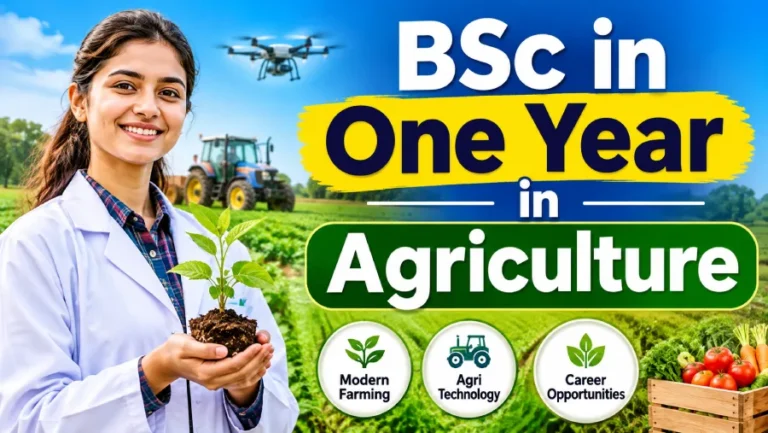
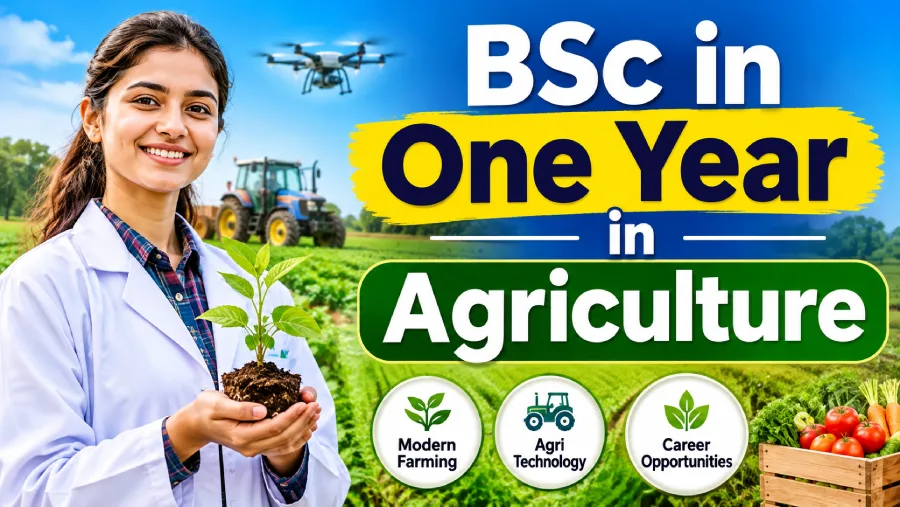
Many students and working professionals search for BSc in One Year in Agriculture because they want to complete their education in a shorter period, continue their studies after a break or explore flexible higher education opportunities.
However, students should understand the standard duration of a BSc Agriculture degree and verify whether any accelerated, credit-transfer or alternative completion pathway is officially available to them.
What Is a BSc in Agriculture?
BSc Agriculture is an undergraduate science programme focused on agricultural production, natural resources, crop science, soil fertility, plant protection, agricultural technology and farming systems.
The programme combines scientific knowledge with practical learning to help students understand how agricultural systems operate and how productivity, sustainability and resource efficiency can be improved.
Students may study subjects such as:
- Agronomy and crop production
- Soil science and soil fertility
- Agricultural economics
- Plant breeding and genetics
- Horticulture
- Agricultural microbiology
- Plant pathology
- Entomology
- Irrigation and water management
- Agricultural extension and rural development
Agriculture is also increasingly connected with technologies such as precision farming, drones, smart irrigation, satellite monitoring, agricultural machinery, data analytics and climate-smart farming.
BSc Agriculture Course Overview
| Course Detail | Information |
|---|---|
| Degree | Bachelor of Science in Agriculture |
| Course Level | Undergraduate |
| Field | Agriculture and Agricultural Sciences |
| Standard Duration | Commonly 4 years for BSc Agriculture (Hons.) in India |
| Study Areas | Crop science, soil science, horticulture, agribusiness and agricultural technology |
| Learning Methods | Theory, practicals, laboratory work, fieldwork and projects |
| Eligibility | Usually 10+2 with relevant science subjects, as per university requirements |
| Career Areas | Agriculture, agribusiness, research, food production, agricultural technology and rural development |
| Higher Studies | MSc Agriculture, MBA Agribusiness and related postgraduate programmes |
Can You Complete a BSc in Agriculture in One Year?
Students interested in completing a BSc in Agriculture in one year should carefully check the university’s academic regulations before enrolling.
In India, BSc Agriculture (Hons.) is commonly structured as a four-year undergraduate programme. Its curriculum generally includes academic coursework, laboratory exercises, practical field activities, projects and other programme-specific requirements.
The University Grants Commission (UGC) has introduced provisions for Accelerated Degree Programmes (ADP), under which eligible students at participating institutions may complete certain undergraduate programmes in a shortened period by earning the required credits faster. However, the regulations do not provide a general route for completing an entire four-year BSc Agriculture degree in just one year.
Students who have previously completed university coursework, earned transferable credits or discontinued their studies may explore whether the institution offers an applicable credit-transfer or re-entry pathway.
Before applying, verify:
- Whether the university is legally authorised to award the degree.
- Whether the programme is available in the advertised study mode.
- Whether your previous academic credits can be transferred.
- Whether the university officially permits the proposed completion timeline.
- Whether the degree will meet your career, government job or higher-education requirements.
A shorter completion option should always be supported by official academic regulations rather than only by advertising claims.
Eligibility for BSc Agriculture
Eligibility criteria vary from university to university, but common requirements for a standard BSc Agriculture programme include:
1. Educational Qualification
Applicants generally need to have completed Class 12 or an equivalent qualification from a recognised board.
2. Science Background
Many institutions require subjects such as Physics, Chemistry and Biology, while some accept Mathematics or other combinations according to their admission rules.
3. Minimum Marks
Universities may require a minimum percentage of marks in Class 12. The percentage can vary by institution and category.
4. Entrance Examination
Some universities admit students through entrance examinations, merit lists or national/state-level admission processes.
5. Previous Education for Alternative Pathways
Students seeking credit transfer, re-entry or accelerated study options may need to submit their previous transcripts, course details, credit records and proof of completed academic work.
Applicants should always confirm the exact eligibility requirements for the university and admission year.
Subjects Covered in BSc Agriculture
A BSc Agriculture programme covers multiple scientific and practical subjects that help students understand agricultural systems, farming methods and the management of crops and natural resources.
1. Agronomy
Agronomy focuses on crop production and the scientific management of agricultural land. Students learn about crop selection, cultivation practices, cropping patterns, seasonal planning, nutrient management and methods of improving crop productivity.
2. Soil Science and Soil Fertility
This subject introduces soil formation, soil composition, physical and chemical properties, fertility, soil testing and nutrient management.
Students learn how soil quality affects crop growth and how appropriate soil-management practices can improve agricultural productivity.
3. Plant Genetics and Breeding
Plant genetics and breeding explore how plant characteristics are inherited and how crop varieties can be developed or improved.
Students learn about genetic variation, selection, breeding methods, seed quality, crop improvement and resistance to environmental stress.
4. Horticulture
Horticulture focuses on the cultivation and management of fruits, vegetables, flowers, ornamental plants and other horticultural crops.
The subject introduces nursery management, propagation methods, orchard management, protected cultivation and commercial horticulture.
5. Agricultural Entomology
Agricultural entomology studies insects that affect agricultural crops, including beneficial insects and crop pests.
Students learn about insect identification, pest life cycles, crop damage, biological control and integrated pest management strategies.
6. Plant Pathology
Plant pathology examines plant diseases caused by fungi, bacteria, viruses and other disease-causing organisms.
Students learn about disease identification, prevention, crop protection, plant health management and strategies to minimise agricultural losses.
7. Agricultural Economics
Agricultural economics explores the financial and economic aspects of farming and agricultural businesses.
Topics may include farm management, agricultural markets, production costs, pricing, rural economies, financial planning and resource allocation.
8. Irrigation and Water Management
This subject focuses on water resources and their effective use in agriculture.
Students learn about irrigation methods, drainage, water conservation, soil moisture, irrigation planning and efficient water-use techniques.
9. Agricultural Microbiology
Agricultural microbiology studies microorganisms involved in soil health, crop growth, nutrient cycling, plant diseases and agricultural production.
It helps students understand beneficial microbes, biofertilisers, microbial activity and the role of microorganisms in sustainable agriculture.
10. Agricultural Extension and Rural Development
Agricultural extension focuses on sharing agricultural knowledge, technologies and improved farming practices with farmers and rural communities.
Students learn about farmer education, rural development programmes, communication methods, agricultural advisory services and community-based agricultural development.
Practical Learning in BSc Agriculture
Agriculture is a practical field, and learning outside the classroom is an important part of agricultural education.
Depending on the university and programme curriculum, students may participate in:
- Crop cultivation and field demonstrations
- Soil sampling and soil testing
- Seed testing and seed treatment
- Plant disease identification
- Pest identification and management
- Nursery preparation and plant propagation
- Irrigation experiments
- Fertiliser application studies
- Agricultural machinery demonstrations
- Farm management projects
- Agricultural surveys and field research
Practical learning helps students connect scientific principles with real-world agricultural challenges and develop skills useful for future employment or business activities.
Benefits of Studying BSc Agriculture
1. Diverse Career Opportunities
Agriculture offers career opportunities in crop production, agribusiness, agricultural research, farm management, food production, agricultural technology and rural development.
2. Growing Importance of Agricultural Technology
Modern agriculture increasingly uses digital tools, precision farming, sensors, drones, data analysis, smart irrigation and automated equipment.
Students with agricultural knowledge and technology-related skills may explore opportunities in emerging agricultural industries.
3. Opportunities in Agribusiness
Agriculture is closely connected to business activities such as seed production, fertiliser distribution, food processing, farm supplies, agricultural marketing and supply chain management.
4. Contribution to Food Security
Agricultural professionals contribute to improving food production, managing natural resources, reducing crop losses and supporting sustainable farming systems.
5. Entrepreneurship Opportunities
Students can explore agricultural ventures such as organic farming, commercial nurseries, food processing, mushroom cultivation, greenhouse farming, agri-consultancy and agricultural product marketing, subject to appropriate skills and resources.
6. Scope for Higher Education
A BSc Agriculture degree may provide a foundation for postgraduate education in agricultural sciences, agribusiness, horticulture, soil science, plant sciences, environmental studies and related disciplines, subject to admission requirements.
Career Opportunities After BSc Agriculture
Agriculture graduates may explore employment opportunities across public-sector organisations, private agricultural companies, farms, research institutions, food businesses, agritech companies and agricultural service providers.
Some career options include:
1. Agricultural Officer
Agricultural officers may work in agricultural advisory services, farm development, agricultural programmes and technical support, depending on their employer and qualifications.
2. Agronomist
Agronomists focus on crop production, cultivation practices, soil management, crop planning and productivity improvement.
3. Farm Manager
Farm managers oversee agricultural operations, including crop planning, resource management, labour coordination, irrigation, production schedules and farm budgets.
4. Agricultural Research Assistant
Research assistants support agricultural experiments, data collection, field trials, laboratory work and research projects.
5. Horticulture Specialist
Horticulture professionals work with fruits, vegetables, flowers, nurseries, landscaping, protected cultivation and commercial horticultural production.
6. Soil and Fertiliser Consultant
Professionals in this area may assist with soil testing, nutrient recommendations, soil fertility management and fertiliser planning.
7. Seed Production Specialist
Seed production specialists work in seed cultivation, quality control, seed processing, production planning and related activities.
8. Agricultural Business Manager
Agricultural business managers may work with agricultural product distribution, sales, procurement, supply chains, market development and business operations.
9. Agritech Professional
Agritech professionals work with agricultural technology solutions, digital farming systems, farm-management software, precision agriculture, sensors and technology-based agricultural services.
10. Agricultural Entrepreneur
Graduates may establish agricultural businesses involving commercial farming, organic products, nurseries, food processing, agricultural equipment, farm consultancy or other ventures.
Career eligibility, job titles and recruitment requirements depend on the employer and the position.
Industries Where Agriculture Graduates Can Work
BSc Agriculture graduates may explore opportunities in several sectors, including:
- Agricultural production and farming
- Agribusiness and agricultural trading
- Seed and biotechnology companies
- Fertiliser and crop protection industries
- Food processing and food supply chains
- Horticulture and nursery businesses
- Agricultural machinery and equipment
- Precision agriculture and agritech
- Agricultural research organisations
- Rural development and agricultural extension
- Agricultural banking and finance
- Agricultural consultancy and farm advisory services
Skills Developed During BSc Agriculture
A BSc Agriculture programme may help students develop the following skills:
- Crop production and cultivation planning
- Soil and nutrient management
- Plant health and pest identification
- Agricultural research and observation
- Fieldwork and laboratory skills
- Farm resource management
- Agricultural business understanding
- Data collection and analysis
- Problem-solving and decision-making
- Communication and advisory skills
- Sustainability awareness
- Agricultural technology adaptation
These skills can support opportunities in both agricultural employment and entrepreneurship.
Higher Education Options After BSc Agriculture
Students who complete an eligible BSc Agriculture qualification may consider postgraduate programmes to specialise further.
Possible options include:
- MSc Agronomy
- MSc Horticulture
- MSc Soil Science
- MSc Agricultural Economics
- MSc Plant Pathology
- MSc Agricultural Entomology
- MSc Genetics and Plant Breeding
- MBA Agribusiness Management
- MSc Agricultural Biotechnology
- Postgraduate programmes in food systems, environmental sciences or rural development
Admission requirements, subject prerequisites and eligibility differ across universities and programmes.
Is BSc Agriculture a Good Choice?
BSc Agriculture can be a suitable choice for students interested in science, farming systems, food production, environmental sustainability, agricultural business or technology-based agricultural solutions.
It may be especially valuable for students who enjoy practical learning, working with plants and crops, understanding natural resources, solving production challenges and exploring business opportunities.
The degree is not limited to traditional farming. Agriculture connects with technology, business, research, food systems, environmental management and innovation.
However, students should choose a university and programme based on its academic quality, practical facilities, curriculum, recognition, career support and genuine learning opportunities rather than only the advertised duration.
How to Choose the Right University for BSc Agriculture
Before enrolling in a BSc Agriculture programme, students should carefully review the following:
- University recognition: Check the institution’s legal status and degree-awarding authority.
- Programme approval and eligibility: Confirm that the programme is properly offered for the academic year and mode of study.
- Curriculum: Review subjects, credit requirements, practical activities and specialisations.
- Practical facilities: Look for farms, laboratories, field facilities, research activities and training arrangements.
- Faculty: Check the academic qualifications and experience of teaching staff.
- Study mode: Confirm whether the course is regular, online, distance or hybrid and whether that mode is permitted for the specific programme.
- Duration: Understand the standard course duration and any officially permitted accelerated or credit-transfer arrangements.
- Career support: Review internship opportunities, industry exposure, placement support and academic guidance.
- Fee structure: Understand the total cost of the programme, including examination, practical, laboratory and other charges.
Students should request written confirmation of degree duration, credit-transfer eligibility and completion requirements before making a payment.
Frequently Asked Questions (FAQs)
1. Can I complete BSc Agriculture in one year?
A standard BSc Agriculture programme is commonly structured over four years in India. Completing the entire degree in one year is not a general or standard route. Students should check whether an institution officially provides a valid alternative completion pathway based on their prior credits and applicable regulations.
2. What is the eligibility for BSc Agriculture?
Applicants generally need to complete Class 12 with relevant science subjects. Subject combinations, minimum marks and entrance examination requirements vary by university.
3. What subjects are taught in BSc Agriculture?
Subjects may include Agronomy, Soil Science, Horticulture, Plant Genetics, Plant Breeding, Agricultural Entomology, Plant Pathology, Agricultural Economics, Irrigation and Water Management, and Agricultural Extension.
4. Is BSc Agriculture a science degree?
Yes. BSc Agriculture is an undergraduate degree in agricultural sciences that combines scientific concepts with practical learning in crop production, soil management, plant science and agricultural systems.
5. Can I pursue BSc Agriculture after 12th?
Yes. Students who meet the university’s subject and admission requirements can apply after completing Class 12.
6. What jobs can I get after BSc Agriculture?
Possible career options include agronomist, agricultural officer, farm manager, research assistant, horticulture professional, seed production specialist, agricultural business professional and agritech specialist.
7. Is there scope for government jobs after BSc Agriculture?
Yes. Agriculture graduates may be eligible for certain government recruitment opportunities in agricultural departments, rural development organisations, research institutions and related bodies. Eligibility depends on the specific recruitment notification, qualifications, examination and other requirements.
8. Can I start my own business after BSc Agriculture?
Yes. Graduates may explore commercial farming, nurseries, food processing, organic agricultural products, mushroom cultivation, agricultural consultancy, greenhouse farming and other agriculture-related ventures.
9. Can I study MSc Agriculture after BSc Agriculture?
Yes, eligible graduates may apply for postgraduate agricultural programmes. However, admission depends on the specialisation, university requirements, entrance examinations and academic eligibility.
10. What should I check before enrolling in a one-year BSc Agriculture programme?
Check the university’s recognition, degree-awarding authority, study mode, credit-transfer policy, programme duration, eligibility, curriculum, practical requirements and written confirmation of the qualification’s acceptance for your intended career or higher education.
Conclusion
BSc Agriculture is a science-based undergraduate programme that provides knowledge of crop production, soil management, plant health, agricultural economics, horticulture and modern agricultural systems. It can open pathways to careers in farming, agribusiness, research, agricultural technology, food production, rural development and entrepreneurship.
Students searching for BSc in One Year in Agriculture should carefully evaluate the advertised programme and understand the difference between a standard undergraduate degree and an officially approved alternative completion pathway. The academic credits, practical training, eligibility requirements and recognition of the degree are essential considerations.
Choosing the right institution and understanding the programme’s academic structure can help students make informed decisions about their education and future careers in agriculture.